
.png)

Recent events in the infant formula market have made one thing clear: ingredient safety is not negotiable. It must be built in from the start. When recalls occur, they trigger critical questions that every supplier and brand must be able to answer: how robust are analytical controls? How frequent is the testing? How granular is traceability for each batch? At Fermentalg, we have concrete answers, because we have built our quality system around these exact questions.
Ingredient safety in infant formula must be designed into the production system from the start, not added later through testing alone.
What Happened: A Crisis Born from Supply Chain Fragmentation
Starting in late 2025, major infant formula brands, including Nestlé, Danone, Lactalis, and Hochdorf, recalled products across more than 65 countries after cereulide, a heat-stable toxin produced by Bacillus cereus, was detected in batches of arachidonic acid (ARA) oil sourced from a third-party supplier. Cereulide is particularly dangerous because it resists boiling, cooking, and standard cleaning protocols, once present in an oil, it cannot be eliminated by conventional processing.
The crisis exposed several structural vulnerabilities common to fragmented supply chains:
- ARA oil had historically been classified as a low-risk ingredient and tested accordingly, creating blind spots in quality programs.
- No established regulatory threshold for cereulide in infant formula exists in the EU, leaving manufacturers without a clear benchmark for action.
- Multi-step, multi-country supply chains delayed identification of the contamination source and slowed public warnings. In some markets, nearly a month elapsed between initial detection and public recall.
The questions asked in the aftermath for ingredients in infant formula, about testing frequency, analytical depth, and batch traceability, are the right ones. And they are questions Fermentalg is in a position to answer.
Our Analytical Framework: Dozens of Tests Per Batch, From Crude to Refined
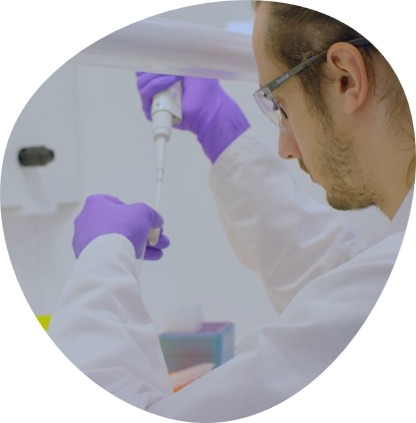
Christine Bousses, our Director of Quality and Analytics, explains the scope of our infant-specific testing program, covering every production bath at two critical stages of the oil lifecycle:
On crude oil:
30+ analyses, including about 20 focused on contaminants.
On ΩRIGINS™ refined oil:
40+ analyses, including about 20 focused on contaminants.
We guarantee the compliance of our oils on an extensive range of parameters for our infant customers:
- 60+chemical contaminants (excluding pesticides)
- 500+ pesticides
- Very low limits on nitrates, nitrites, PAHs, chlorates, perchlorates, and heavy metals
- Absence of endocrine disruptors
On the microbiological side, we conduct 13 analyses per batch, specifically including Bacilluscereus, Cronobacter, and Listeria monocytogenes, all of which are directly relevant to the contamination type identified in the recent ARA recalls.
Proactive Screening: Anticipating Risks Before They Become Recalls
The ARA crisis has rightly brought contamination testing back into focus, but it is not the only emerging risk on the horizon. Per- and polyfluoroalkyl substances (PFAS), a broad family of synthetic chemicals associated with health concerns, are attracting growing regulatory attention globally, including in the context of infant nutrition.
Unlike many contaminants, PFAS are not generated by the production process itself but can enter products through environmental exposure, packaging, or processing aids. Because our fermentation takes place entirely in closed, controlled bioreactors, followed by refining in our own facility, our model inherently limits PFAS exposure pathways. But we do not stop there: we conduct continuous regulatory monitoring and systematically screen for emerging contaminants, including PFAS, as part of our standard quality program.
There are currently no mandatory PFAS-specific limits for infant formula ingredients in the EU, US, or China. But the absence of a regulatory threshold is not the same as the absence of risk. Our philosophy is to test, to know, and to act, regardless of whether the regulation yet requires it.
Going Beyond Compliance: Where Our Specifications Exceed the Strictest Quality Standards
Regulatory requirements define a floor. At Fermentalg, we hold ourselves to a higher standard, and we have the data to prove it. Across our main target markets (EU, China, and the United States), we apply internal infant specifications that are, in several cases, stricter than the most demanding regulation.
Going beyond compliance means two things for us: testing what no regulation yet requires and setting internal limits that are stricter than what even the most demanding regulation demands.
Testing what is not (yet) required
Several of the analyses we perform are not mandated by infant formula regulations. We conduct them because we believe that in infant nutrition, the absence of a regulatory requirement is not a reason not to test; it is a reason to be more vigilant. These optional analyses cover emerging contaminants and risk categories for which regulatory frameworks are still developing, giving our customers advance assurance before the regulation catches up.
Specifications stricter than the most stringent regulation
Where regulatory thresholds do exist, we do not simply aim to meet them, we set our own internal specifications for infant products further. Across several parameters, our guaranteed limits are stricter than the most demanding standard applicable in our target markets (EU, China, US). This means that when a customer buys ΩRIGINS™ oil from Fermentalg, they are receiving a product built to a higher bar than the regulation requires.
An important nuance in the European Union: infant formula regulations set limits on the finished ready-to-eat product, not on the oil used as an ingredient. Our specifications apply directly to our oils. But to ensure our customers’ peace of mind when formulating final products, we ensure our oils meet and sometimes exceed the most demanding regulatory threshold applicable to the finished formula (mercury, 3-MCPD or glycidyl fatty acid esters for example).
These are not marginal differences. They reflect a deliberate choice to protect infants well beyond what any regulator currently requires of the finished product.
Safety as a System: Full Traceability from Algal Strain to Finished DHA Oil
The ARA recall was not simply a testing failure; it was a traceability failure. When a contaminant enters a supply chain at an early processing stage, and that stage is controlled by a third party in another country, the time required to identify the source and issue a recall compounds the harm.
At Fermentalg, each one of our DHA production starts in Libourne, France with a cryotube from our working cell bank. Our proprietary strain (FCC-3204) is then sent to our shareholder HuvePharma’s facilities in Europe to start large-scale production: controlled microalgae fermentation conducted entirely in closed bioreactors, followed by extraction and refining. There is no third-party fermentation, no crude oil sourced from an external supplier, and no processing step we do not control directly. This means:
- Full traceability from algae strain to finished oil for every batch
- No exposure to environmental contaminants during production
- FSSC 22000 Certified processes

- Advanced analytical monitoring at every production stage, not just at the finished product
Safety is not a response to a crisis. It is a system designed before any crisis occurs.
Peace of Mind Must Be Guaranteed, Not Assumed
In infant nutrition, peace of mind must be guaranteed, not assumed. This is why we have a specific ΩRIGINS™ infant range at Fermentalg.
Our guarantee is grounded in 30+ analyses on crude oil, 40+ on refined oil, 13 microbiological tests per batch, screening for 500+ pesticides and 60+ chemical contaminants, and continuous monitoring for emerging risks all within a fully traceable, FSSC 22000 certified and made in Europe production system.
The 2026 ARA crisis is a turning point. We are ready, because we have been building towards it from the start. We are already mastering it for our DHA, and now using our expertise to produce ΩRIGINS™ ARA in Europe in 2026. Contact us to learn more.
Safety is therefore not a reaction to crises, but the result of a fully controlled production and quality system.