


The importance of DHA for the developing fetus and children is well known, as for the development and maintenance of the eye, especially the retina. Supplementation of infant formula with DHA from algae has, for example, been shown to improve visual acuity in formula-fed infants at 12 months of age (1).
DHA continues to have a key role in eye health throughout life and is particularly important in modern environments where eyes are exposed to increased oxidative stress and screen time. In the retina, DHA increases mitochondrial activity and has antioxidative, anti-inflammatory, antiapoptotic (preventing cell death), and antiangiogenic effects. DHA is a major lipid constituent of photoreceptor membranes, essential for their structural and functional integrity. Because retinal membranes are continuously renewed require a constant supply of DHA, sufficient dietary intake may support retinal function, especially where damage has already occurred.
The impact of blue light on our eyes
Over the last 20 years the lighting in our homes has changed remarkably as we move to more energy-efficient bulbs. Although incandescent, fluorescent and modern LED bulbs all emit light perceived as white, covering the whole spectrum from blue to red, their composition has gradually shifted towards higher blue light content. LED lights especially are designed to emit bright light like midday sun, with a pronounced e peak in the blue spectrum. In addition, our increased reliance on devices with LED-lit screens has further increased our exposure to blue light, often at times that differ from those experienced during human evolution.
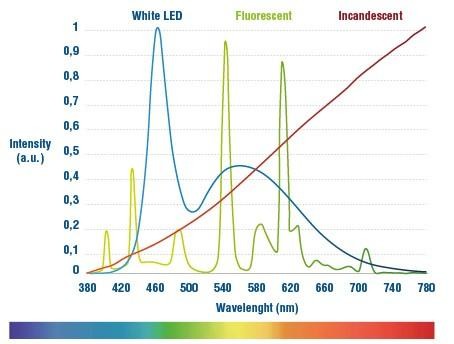
The effects of blue light on our circadian rhythms are now recognized, and while there are negative outcomes on our health linked to the disruption of sleep, blue light also directly impacts our primary light sensor, the retina.
Many studies have reported that blue light can damage the retina, with effects classified as either short-term or chronic. Short-term phototoxic effects occur after acute exposure (less than 12 hours) where total light energy may cause oxidative damage (2). Blue light has higher energy than red light and is therefore potentially more damaging. Adequate DHA in photoreceptor membranes upregulates the production of the potent antioxidant GSH (3), helping to reduce the potential damage.
Longer-term effects occur with chronic exposure over days and months and are specific to certain blue light wavelengths.
Animal studies suggest that sensitivity to this blue-light damage may be higher at night, and that children and young people whose eyes do not fully filter blue light, may be particularly sensitive, while older adults are also vulnerable.
For instance, long-term blue-light exposure may contribute to oxidative damage in the macula, the most sensitive area of the retina, and is considered one of the factors in age-related macular degeneration (AMD), along with low-grade inflammation over many years.
Acting against macular degeneration
Age-Related Macular Degeneration (AMD) is the primary cause of irreversible vision loss in the adults over 65s in the US and the fourth leading cause of blindness globally. It results from damage to the macula, the central part of the retina, which makes reading, face recognition and many daily activities difficult.
DHA is the major structural and metabolic polyunsaturated fatty acid in the retina, accounting for around 20% of its weight, and it also helps manage inflammation. Unsurprisingly, population studies have shown a correlation between low omega-3 intake and higher AMD risk (4,5).
Maintaining high circulating DHA levels of DHA seems to offer protection even after the first signs of AMD appear (6), and very high-dose omega-3 may provide some therapeutic benefit in partially restoring vision (7).
Supplements containing DHA Ωrigins™ can help maintain high circulating DHA levels that may reduce AMD risk. Its high DHA concentration allows a meaningful dose to be delivered in a single capsule, combined with other supplements such as the carotenoids lutein and zeaxanthin, or zinc that provide additional protective benefits (8).
Other benefits for the eye
Maintaining high levels of DHA in the body may also have beneficial effects on the maintenance of proper intraocular pressure, reducing the risk of glaucoma (9), and can aid in nerve regeneration and wound healing after eye injury in animal models (10). It also has a very important role to play at the front of the eye and management of the phenomenon known as dry eye.
Dry Eye
Our modern environment challenges the surface of our eyes; pollution, time in air-conditioned spaces, and prolonged screen use without blinking all affect this delicate organ. The cornea, conjunctiva, eyelids, and tear film are essential for clear vision; losing the tear film can reduce image quality by 20-40% and dry eye accounts for one in four visits to eye care professionals in the US (11). Dry eye is characterized by ocular surface inflammation and inadequate production of tears, and reducing this inflammation can result in an alleviation of symptoms (12). Epidemiological studies in well-nourished western populations have suggested a role for nutritional supplements like omega 3 in delaying the onset or reducing the risk of these disorders.
Intervention studies have investigated whether omega-3 supplementation, alongside artificial tear treatment,could provide benefits, and a recent meta-analysis concluded that omega-3 fatty acid supplementation significantly improves both symptoms and signs in dry eye patients (13). Furthermore for a subset of dry-eye sufferers, often women, the condition is immune-mediated, and DHA plays a key role in its management (14).
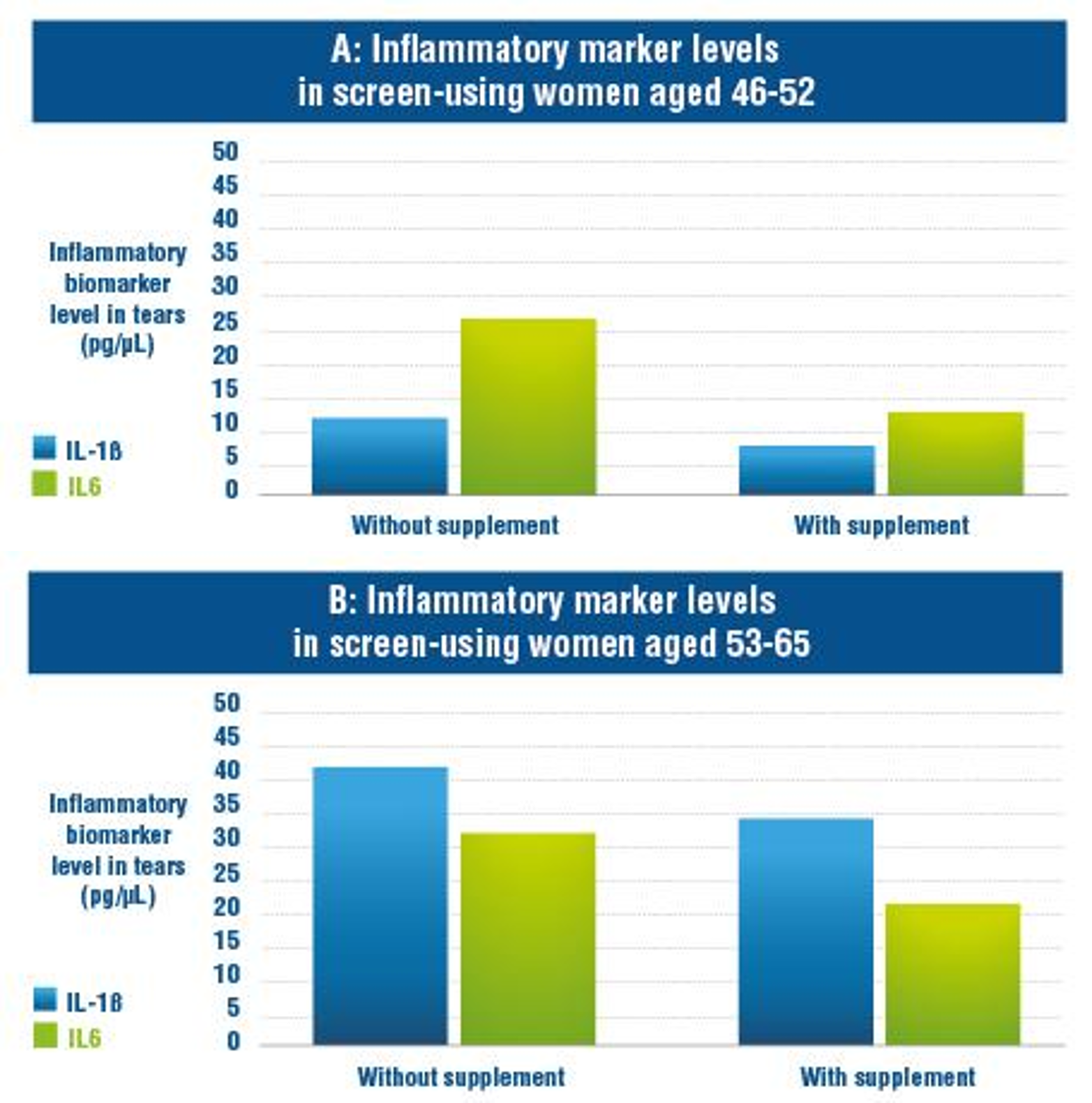
The following graphs show reductions in inflammatory markers interleukin-b and interleukin 6 among female office workers at risk of dry eye due to prolonged computer use. Inflammation is higher in older women, but in both groups, omega-3 and antioxidant supplementation significantly reduced inflammation and was associated with improvements in clinical signs and symptoms (15).
The importance of maintaining high circulating DHA for eye health
The eye is a sensitive structure, exposed to the external environment, and particularly susceptible to damage, especially with age. DHA has both an important structural role in the eye and a role in resolving inflammation, thereby protecting against and reducing oxidative damage.
DHA has a clear preventative role in the long-term health of the eye, with it being important to maintain a high circulating level in our blood. A recent review has supported dietary supplementation with high-dose DHA (approximately 1g/day) in triglyceride form as a potent compound for improving eye health (3).
Other algal oils are limited to 250 mg DHA/day when used as a supplement, but DHA Ωrigins™ oil can be taken at doses providing up to 1 g DHA per day, four times higher, offering a greater potential protective effect.
DHA’s role in immunity
As seen above, some of DHA’s beneficial effects on eye health are due to its ability to resolve inflammation. Our next blog article will examine in more detail how omega-3s, particularly DHA, can modulate the immune system to support long-term health.